

Why Sauna Integration Boosts Training Adherence
Sauna integration is defined as the deliberate pairing of heat therapy sessions with existing workout routines to reinforce recovery habits and sustain long-term training consistency. Research from the Finnish KIHD cohort and experts like Ben Yamuder at Hospital for Special Surgery (HSS) and Jason Sonners at the University of Miami confirms that why sauna integration boosts training adherence comes down to two forces working together: real physiological recovery benefits that athletes feel immediately, and a behavioral structure that makes skipping the session feel harder than doing it. This is not passive wellness. It is a deliberate recovery strategy that compounds over weeks.
How does sauna use physiologically support recovery to encourage adherence?
Post-workout sauna use accelerates recovery through mechanisms athletes can feel within a single session, and that felt benefit is what keeps them coming back. Ben Yamuder at HSS explains that passive blood flow increase in the sauna speeds the removal of acidic ions responsible for the burning stiffness athletes feel after hard training. When soreness clears faster, the psychological association between training and suffering weakens, and motivation to return the next day strengthens.
The Finnish KIHD cohort adds a longer-term layer. Their data links sauna bathing with systemic recovery markers including heat shock protein expression and improved endothelial function, both of which support faster tissue repair between sessions. These are not cosmetic benefits. They directly reduce the recovery debt that accumulates when athletes train hard without adequate restoration.
A sauna session also mimics the cardiovascular demand of light exercise. Studies show that sauna elevates heart rate and circulation in a way that extends the cooldown phase rather than ending it abruptly. For athletes who train intensely, this means the body transitions out of peak stress more gradually, reducing central nervous system fatigue and improving sleep quality that night.

The table below compares sauna’s physiological recovery effects against a standard passive cooldown.
| Recovery factor | Passive cooldown | Post-workout sauna |
|---|---|---|
| Blood flow increase | Minimal | Significant vasodilation |
| Lactic acid clearance | Slow (30-60 min) | Accelerated (15-20 min) |
| Heat shock protein activation | None | Documented in KIHD cohort |
| CNS recovery support | None | Improved via thermoregulation |
| Cardiovascular extension | Stops at rest | Continues through session |
Pro Tip: Drink 16 oz of water before entering the sauna after training. Dehydration from exercise compounds quickly with heat exposure, and even mild fluid loss blunts the recovery benefits you are there to collect.
Why does convenience and habit design make sauna use easier to sustain?
The most underrated reason athletes stick with sauna use is not the science. It is the friction reduction. Jason Sonners and Christopher Minson both emphasize that convenience drives lasting sauna habits because post-workout, your body is already warm, already sweating, and already in a state that makes heat exposure feel natural rather than effortful. You are not starting a new behavior from scratch. You are extending one that already happened.
Behavioral science calls this “habit stacking,” and it is one of the most reliable methods for building consistency. When sauna use is attached to an existing behavioral loop like finishing a training session, the decision to do it requires almost no willpower. The workout triggers the sauna, and the sauna becomes the reward. Over time, the sequence feels incomplete without it.
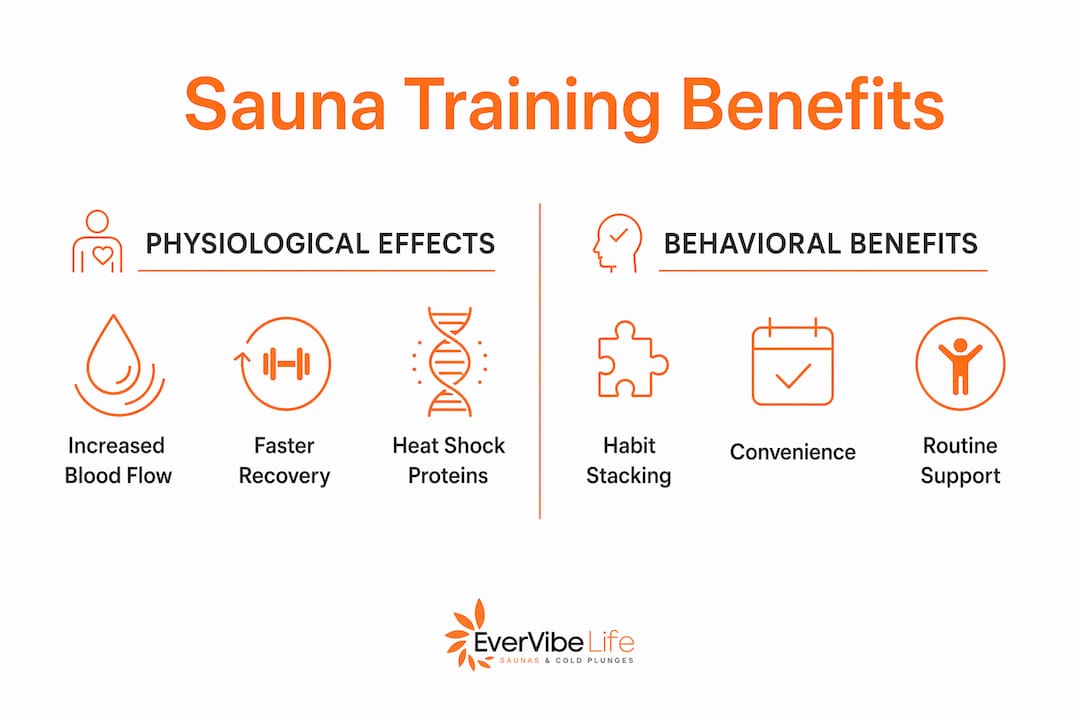
Long-term training consistency from sauna stems from habitual, frequent use rather than occasional sessions. This matters because the recovery benefits themselves accumulate week over week, giving athletes a tangible reason to maintain the habit. The feedback loop is self-reinforcing: use it regularly, feel better, train harder, need recovery more, use it again.
Here are the practical design principles that make sauna integration stick:
- Attach it to the shower. HSS experts note that habit-loop formation combining sauna and shower routines is the most common pattern among athletes who sustain the practice long-term. Sauna first, shower after. The sequence becomes automatic.
- Schedule frequency before intensity. Three sessions per week at 15 minutes each builds more durable adherence than one 45-minute session. Frequency trains the habit; duration can increase later.
- Set a minimum viable session. On low-energy days, commit to 10 minutes. Showing up matters more than optimizing every variable.
- Track how you feel the next morning. Soreness levels, sleep quality, and training readiness are the metrics that reinforce the behavior. Numbers on a screen are abstract; waking up recovered is not.
Pro Tip: Place your sauna gear, towel, and water bottle in your gym bag before every session. Removing the setup friction means the only decision left is whether to sit down.
What are optimal sauna dosing and timing strategies?
Sauna dosing is the variable most athletes get wrong, either by doing too little to feel results or too much and burning out on the practice. Finnish and University of Manitoba research endorses 15 to 30 minute sessions, 3 to 7 times weekly as the range that balances meaningful benefit with tolerability. That range is wide by design because individual heat tolerance varies significantly based on fitness level, hydration status, and acclimatization.
Timing matters as much as duration. Post-exercise sauna timing capitalizes on elevated circulation from training to maximize recovery benefits. The body’s core temperature is already elevated, cardiac output is high, and peripheral blood vessels are dilated. Entering the sauna in this state amplifies all three effects rather than building them from a resting baseline.
The comparison below shows how different dosing protocols affect both adherence and benefit outcomes.
| Protocol | Frequency | Duration | Adherence profile | Benefit level |
|---|---|---|---|---|
| Beginner | 2-3x weekly | 10-15 min | High (low barrier) | Moderate |
| Intermediate | 3-4x weekly | 15-20 min | High (habit formed) | Strong |
| Optimal (KIHD) | 4-7x weekly | 20-30 min | Moderate (requires discipline) | Maximum |
| Overuse risk | Daily, 45+ min | 45+ min | Low (fatigue, disrupted sleep) | Diminishing |
The infrared versus traditional sauna distinction also affects adherence. Infrared saunas operate at lower ambient temperatures (120 to 150°F versus 170 to 195°F for traditional Finnish saunas) while still achieving deep tissue heating. For athletes new to heat therapy, infrared sessions feel less intense, which lowers the psychological barrier to starting and sustaining the habit. The Finnish KIHD data showing 40 to 60 percent lower cardiovascular risk with frequent use applies to traditional sauna, but infrared use carries comparable recovery benefits for most athletes.
How can athletes practically integrate sauna use into their training routine?
Practical integration is where most athletes either build a lasting habit or abandon the idea after two weeks. The steps below are sequenced to build heat tolerance and behavioral consistency at the same time.
- Start with 10-minute sessions for the first two weeks. Heat tolerance is trainable, and starting too aggressively causes dizziness or fatigue that discourages repeat use. Ten minutes post-workout is enough to trigger blood flow benefits without overwhelming the system.
- Schedule sauna immediately after training, not hours later. Post-exercise timing extends elevated circulation from the workout, compounding the recovery effect. Waiting until evening loses this physiological window.
- Hydrate before, during, and after. Bring a 20 oz water bottle into the session. Sweat rate in a sauna can reach one liter per hour, and dehydration is the fastest way to cut a session short and associate sauna use with feeling bad.
- Increase session length by five minutes every two weeks. Gradual progression builds heat acclimatization without the adverse effects that derail adherence. Target 20 to 25 minutes per session by week six.
- Use sauna to address specific recovery bottlenecks. If lower back tightness limits your next-day training, focus sessions on that window. If CNS fatigue from heavy lifting is the issue, prioritize longer, lower-temperature sessions to support parasympathetic recovery.
- Treat sauna as a cooldown extension, not a separate activity. Athletes who frame sauna as part of the workout rather than an optional add-on report higher long-term compliance. The session ends when you leave the sauna, not when you rack the bar.
Key takeaways
Sauna integration boosts training adherence because it delivers immediate, felt recovery benefits while fitting into existing behavioral loops that require almost no additional willpower to sustain.
| Point | Details |
|---|---|
| Physiological recovery is the hook | Faster lactic acid clearance and heat shock protein activation give athletes a tangible reason to return. |
| Habit stacking drives consistency | Pairing sauna with post-workout showers removes decision fatigue and automates the behavior. |
| Optimal dose is 15-30 min, 3-7x weekly | Finnish KIHD research links this range to maximum cardiovascular and recovery benefit without overuse risk. |
| Infrared lowers the entry barrier | Lower ambient temperatures make infrared saunas more accessible for athletes building initial heat tolerance. |
| Frequency matters more than duration | Three shorter sessions per week build more durable adherence than one long session. |
What I have learned about sauna and training adherence
Most athletes approach sauna the same way they approach supplements: they read about the benefits, try it a few times, and then quietly drop it when life gets busy. The ones who stick with it are not more disciplined. They have just designed the habit better.
The physiological case for sauna is real and well-documented. But physiology alone does not keep people consistent. What keeps them consistent is that the session feels good, fits naturally into what they are already doing, and delivers results they notice the next morning. When those three things align, the habit becomes self-sustaining.
The biggest mistake I see is treating sauna as a standalone recovery tool rather than an extension of training. Athletes who schedule sauna separately from their workouts, or who use it only when they feel especially sore, never build the behavioral momentum that makes the practice automatic. The ones who use it every time they train, even for just 10 minutes, are the ones who are still doing it six months later.
One warning worth stating plainly: more is not always better. Overshooting individual heat tolerance causes fatigue and sleep disruption that bleeds directly into training quality. The goal is a dose you can sustain five days a week without dreading it. Start conservative, build gradually, and let the results do the motivating.
— Derek
Build your at-home sauna recovery routine with Evervibelife
Athletes who train consistently need recovery tools that match that consistency. A gym sauna is convenient until it is not: peak-hour crowds, time limits, and shared space all create friction that erodes the habit over time.

Evervibelife carries a full range of at-home infrared saunas built specifically for athletes who want recovery on their schedule. The Sunray Sierra 2-person infrared sauna uses carbon heaters to deliver even, penetrating heat at athlete-friendly temperatures, making it a strong fit for daily post-workout sessions. For solo athletes, the WizziSauna SR01 full spectrum infrared sauna in red cedar offers full spectrum heating in a compact footprint. Both ship free with hassle-free returns.
FAQ
How does sauna use improve training adherence?
Sauna integration improves adherence by pairing heat therapy with the post-workout state, creating a repeatable habit loop that requires minimal willpower. The immediate recovery benefits, including faster soreness clearance and improved sleep, give athletes a felt reason to continue.
How often should athletes use a sauna for best results?
Finnish KIHD research recommends 3 to 7 sessions per week at 15 to 30 minutes each for meaningful cardiovascular and recovery benefits. Frequency matters more than session length, especially when building the initial habit.
Is infrared sauna as effective as traditional sauna for recovery?
Infrared saunas operate at lower temperatures but still achieve deep tissue heating and comparable recovery benefits for most athletes. Their lower ambient heat makes them more accessible for beginners and better suited to daily use without the fatigue risk of high-temperature traditional saunas.
When is the best time to use a sauna relative to a workout?
Immediately after training is the optimal window. Post-exercise timing capitalizes on elevated core temperature and circulation from the workout, amplifying the recovery effect rather than building it from a resting baseline.
Can sauna use replace other recovery methods?
Sauna is a powerful adjunct to recovery, not a replacement for sleep, nutrition, or structured rest. Athletes who use it alongside these fundamentals see compounding benefits; those who use it as a substitute for them do not.