

Spa technology: 63% lower CV risk for home wellness
At-home spa technology can reduce cardiovascular risk by up to 63%, yet most people buying wellness devices have no clear idea which ones actually deliver results. The market is flooded with infrared saunas, cold plunge tubs, massage chairs, and hydrotherapy systems, each promising recovery and relaxation. Sorting real science from marketing noise is harder than it should be. This guide breaks down how each major spa technology works, what the evidence actually supports, and how you can build a home routine that genuinely moves the needle on recovery, sleep, and long-term health.
Table of Contents
- What is spa technology? Core concepts and devices
- Evidence-backed benefits: How spa technology supports recovery and wellness
- Comparing home vs commercial spa technology
- How to choose and use spa technology at home
- The uncomfortable truth about spa technology at home
- Discover innovative spa solutions for your home
- Frequently asked questions
Key Takeaways
| Point | Details |
|---|---|
| Evidence-driven benefits | Spa technologies like saunas and hydrotherapy are backed by clinical studies for cardiovascular and stress reduction. |
| Convenience vs intensity | At-home devices maximize privacy and ease, but offer less intensity than professional treatments. |
| Choosing wisely | Select spa technologies based on proven outcomes and personal wellness needs rather than hype. |
| Complement, don’t replace | Spa tech works best when combined with traditional, human-centered wellness practices. |
| Application for recovery | Cryotherapy suits acute soreness, while infrared saunas provide sustained recovery and relaxation. |
What is spa technology? Core concepts and devices
Spa technology refers to any device or system that uses controlled physical stimuli, such as heat, cold, water pressure, or vibration, to produce measurable health outcomes. It is not a single product. It is a category spanning multiple mechanisms, each targeting different physiological responses.
The four main device categories you will encounter are:
- Hydrotherapy systems: Jetted tubs, contrast baths, and underwater massage units that use water pressure and temperature to stimulate circulation and ease muscle tension.
- Infrared saunas: Cabins that use infrared light to heat body tissue directly, raising core temperature without the extreme ambient heat of traditional Finnish saunas.
- Cryotherapy and cold plunge tubs: Devices that expose the body to temperatures between 39°F and 59°F to reduce inflammation and trigger recovery hormones.
- Massage chairs and percussion devices: Motorized systems that replicate deep tissue and shiatsu techniques to reduce muscle soreness and lower cortisol.
Each category operates through a distinct mechanism. Hydrotherapy, infrared saunas, and cryotherapy each trigger unique physiological responses through water pressure, IR light absorption, and temperature extremes respectively. Understanding this distinction helps you match the right device to your actual goal.
| Device | Primary mechanism | Best for | Intensity |
|---|---|---|---|
| Infrared sauna | IR light, core heating | Cardiovascular, detox, relaxation | Moderate |
| Cold plunge tub | Cold exposure, vasoconstriction | Acute soreness, inflammation | High |
| Hydrotherapy bath | Water pressure, temperature | Circulation, joint pain | Low to moderate |
| Massage chair | Mechanical compression | Stress, sleep, muscle tone | Low to moderate |
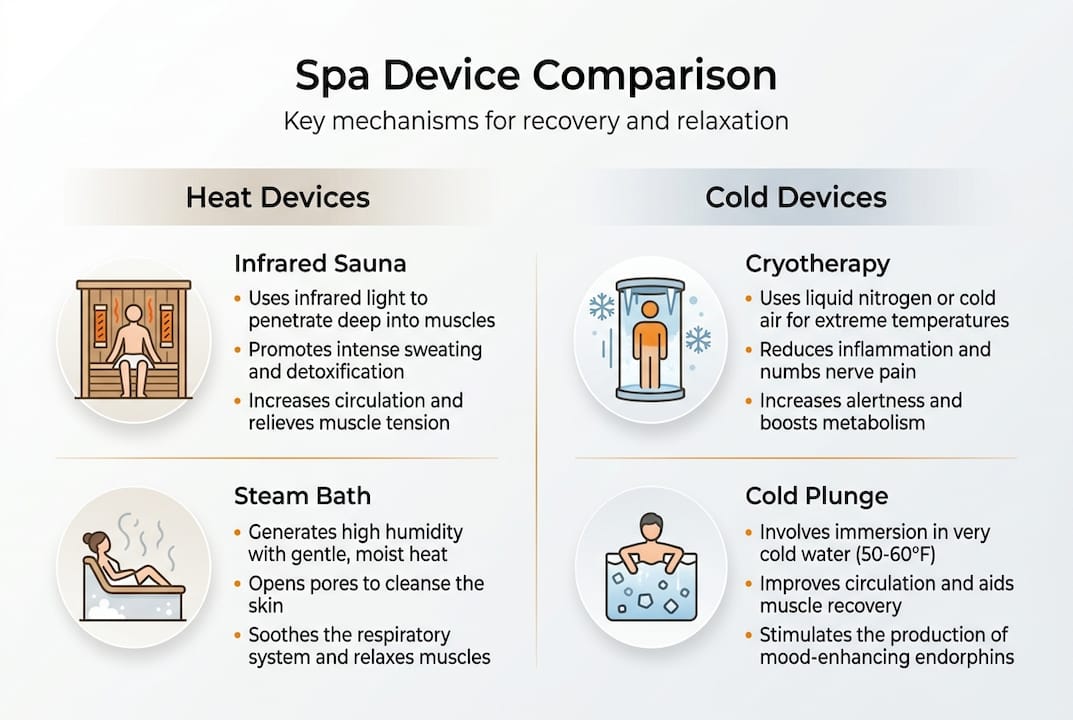
For a closer look at how cold and heat devices compare side by side, comparing cryotherapy and infrared sauna gives you a practical breakdown of trade-offs. You can also browse cold plunge and sauna options to see what fits your space and budget before committing.
Evidence-backed benefits: How spa technology supports recovery and wellness
The science behind spa technology is more robust than most people realize. This is not anecdotal wellness culture. Controlled trials and large cohort studies back up specific claims for specific devices.
Infrared sauna and cardiovascular health
Using a sauna four to seven times per week is linked to a 50 to 63% reduction in cardiovascular mortality risk. The mechanism involves repeated mild heat stress that trains vascular response, reduces arterial stiffness, and lowers resting blood pressure over time. This is not a short-term effect. The benefit scales with frequency.
Balneotherapy and stress reduction
Balneotherapy, which is therapeutic bathing using mineral water or hydrotherapy protocols, has shown a 46% reduction in self-reported stress and measurable drops in depression scores in randomized controlled trials. The warm water immersion activates the parasympathetic nervous system, slowing heart rate and lowering cortisol within minutes.
Massage chairs and sleep quality
Regular massage chair sessions have been shown to improve sleep efficiency and reduce nighttime waking. The cortisol-lowering effect of mechanical compression also improves muscle tone recovery in people doing regular strength training.
Here is a quick summary of outcomes by device:
| Device | Key benefit | Quantified outcome |
|---|---|---|
| Infrared sauna | Cardiovascular risk reduction | Up to 63% lower CV mortality |
| Hydrotherapy | Stress and depression relief | 46% stress reduction in RCTs |
| Massage chair | Sleep and muscle recovery | Improved sleep efficiency |
| Cold plunge | Inflammation and soreness | Faster post-exercise recovery |
The evidence is clearest for infrared saunas and hydrotherapy. Cold plunge research is growing fast, and early results on inflammation and mood are genuinely compelling.
For real-world outcomes from people using at-home sauna and cold plunge results, the pattern is consistent: frequency and consistency matter far more than device sophistication.
- Acute recovery (post-workout soreness): Cold plunge is most effective within 30 minutes of exercise.
- Sustained recovery (chronic fatigue, joint pain): Infrared sauna and hydrotherapy show better long-term results.
- Mental wellness (stress, sleep, mood): Massage chairs and warm hydrotherapy outperform cold modalities.
Comparing home vs commercial spa technology
Commercial spa treatments offer things home devices cannot fully replicate: a trained therapist adjusting pressure in real time, medical-grade equipment calibrated for clinical outcomes, and the psychological benefit of leaving your environment entirely. That context matters.
But home devices offer something commercial spas cannot: daily access without scheduling, travel, or cost per session. For most people building a consistent wellness routine, that accessibility is the deciding factor.
| Factor | Home device | Commercial spa |
|---|---|---|
| Convenience | Available daily, no booking | Requires scheduling, travel |
| Intensity | Moderate, consumer-grade | High, clinical or professional |
| Privacy | Complete | Shared or semi-private |
| Expertise | User-directed | Trained therapist |
| Cost over time | One-time investment | Recurring per-session cost |
| Customization | Limited by device specs | High, therapist-adjusted |
Home devices offer privacy and convenience but deliver less intensity and lack the expertise of professional treatment. That is not a flaw. It is a design reality you need to plan around.
The efficacy of at-home spa devices is well-documented for maintenance and general wellness. Where home devices fall short is in treating acute clinical conditions or injuries that need professional assessment.
Key limitations to keep in mind:
- Cold plunge tubs at home rarely reach the precise temperatures used in clinical cryotherapy protocols.
- Consumer infrared saunas vary significantly in IR wavelength quality and panel coverage.
- Massage chairs cannot replicate the adaptive pressure of a skilled therapist.
Pro Tip: Use your home devices five to six days per week for maintenance, then schedule a professional massage or clinical hydrotherapy session once or twice a month. This combination gives you the frequency benefits of home access and the intensity benefits of expert treatment. Explore home versus commercial spa options to find what fits your lifestyle.
How to choose and use spa technology at home
Buying the wrong device is expensive and discouraging. The right approach starts with identifying your primary goal before you look at any product specs.
Step-by-step device selection
- Define your primary need. Are you recovering from intense training? Managing chronic stress? Improving sleep? Each goal points to a different device category.
- Match the mechanism to your goal. Acute post-workout soreness responds best to cold exposure. Chronic tension and sleep issues respond better to heat and compression.
- Assess your space and budget. A full infrared sauna requires 4x4 feet minimum and a dedicated electrical circuit. A cold plunge tub needs less space but requires water management.
- Check the evidence for your shortlisted device. Prioritize devices with published clinical data, not just testimonials.
- Start with one device and build a routine before adding more. Consistency with one tool beats sporadic use of five.
- Track your outcomes. Sleep quality, recovery time, and resting heart rate are measurable. Use them to evaluate whether the device is actually working for you.
Common pitfalls to avoid:
- Over-using cold plunge therapy (more than once daily can blunt training adaptations)
- Treating spa tech as a replacement for sleep, nutrition, and movement
- Buying novelty devices with no peer-reviewed support
Pro Tip: Tech enhances but should not replace the natural and human elements of wellness. Your infrared sauna works best when you are also sleeping well and managing stress through other means. When you are ready to invest, choosing at-home spa devices with a clear goal in mind makes the decision much simpler.
The uncomfortable truth about spa technology at home
Here is what most brands will not tell you: home spa technology is excellent for maintenance and genuinely poor at transformation on its own. We have seen this pattern repeatedly. Someone invests in a premium infrared sauna, uses it consistently for three months, and sees real improvements in sleep and resting heart rate. Then they plateau. The device did not stop working. Their baseline just improved, and further gains require more than technology.
Home devices are supportive, not transformative on their own. The research is consistent on this. Spa technology amplifies a good wellness foundation. It does not create one from scratch.
The consumers who get the most from their devices are not the ones with the most sophisticated equipment. They are the ones who treat their sauna or cold plunge as one layer of a broader routine that includes quality sleep, real nutrition, and intentional movement. Technology is a multiplier, not a shortcut. Balancing traditional and tech wellness is where the real, lasting results live.
Discover innovative spa solutions for your home
If the evidence in this article has you thinking seriously about upgrading your recovery routine, the next step is straightforward.
At EverVibe Life, we curate ultimate cold plunges and saunas chosen specifically for their evidence-backed performance, build quality, and real-world usability at home. Every product we carry is selected because it delivers on the science, not just the marketing. Whether your goal is faster post-workout recovery, deeper sleep, or long-term cardiovascular health, our catalog connects your wellness goals with the right technology. Free shipping and hassle-free returns mean you can invest with confidence.
Frequently asked questions
What is spa technology and how does it work?
Spa technology includes devices like hydrotherapy baths, infrared saunas, and massage chairs that use water, heat, or cold to trigger health benefits. Hydrotherapy jets, infrared saunas, and cryotherapy each operate via specific mechanisms that produce distinct physiological responses in the body.
Do at-home spa devices deliver the same results as commercial treatments?
Home spa devices support recovery and wellness effectively but typically provide slower, less intense results than professional treatments. Home devices offer privacy and convenience but trade off intensity and expert guidance for daily accessibility.
Which spa technologies are best for recovery versus relaxation?
Cryotherapy and cold plunge tubs are best for acute post-exercise soreness, while infrared saunas and hydrotherapy are better suited for sustained recovery and overall relaxation. The right choice depends on whether your need is immediate or ongoing. Cryo for acute recovery, IR for sustained repair is a reliable rule of thumb.
Is there scientific evidence supporting spa technology for wellness?
Yes. Studies show sauna reduces CV risk by up to 63%, balneotherapy cuts stress by 46%, and massage chairs measurably improve sleep efficiency and muscle recovery across multiple controlled trials.
Should spa technology replace traditional wellness methods?
No. Tech complements traditions and works best when layered onto solid fundamentals like quality sleep, good nutrition, and consistent movement rather than substituting for them.